When a car turns left in front of a motorcycle, the crash can happen within seconds. These accidents are common at intersections, driveways, and roadways where drivers must judge the speed and distance of oncoming traffic. Because motorcycles are smaller than passenger vehicles, drivers sometimes fail to notice them or misjudge how close they are.
In California, a left-turn motorcycle accident often raises important questions about fault, visibility, timing, traffic signals, and road conditions. The driver making the left turn is usually required to yield to oncoming traffic. However, every accident depends on the facts, evidence, and actions of everyone involved.
Why Left-Turn Motorcycle Accidents Happen
 Left-turn motorcycle accidents often happen because a driver does not see the motorcycle before turning. In other cases, the driver may see the rider but incorrectly assume there is enough time to complete the turn. This mistake can place the car directly in the motorcycle’s path.
Motorcycles can be harder to spot because they have a narrower profile than cars or trucks. A rider may also be hidden by traffic, glare, roadside objects, or another vehicle. At busy intersections, a driver may focus on traffic lights, pedestrians, or vehicles in other lanes and miss the approaching motorcycle.
These crashes can also involve distracted driving, speeding, poor weather, or unsafe turns. A driver who looks down at a phone, rushes through a turn, or fails to check carefully before turning may create a serious hazard for riders.
For more rider-focused safety guidance, you can read our top motorcycle safety tips for riders in San Bernardino.
Who May Be at Fault When a Car Turns Left
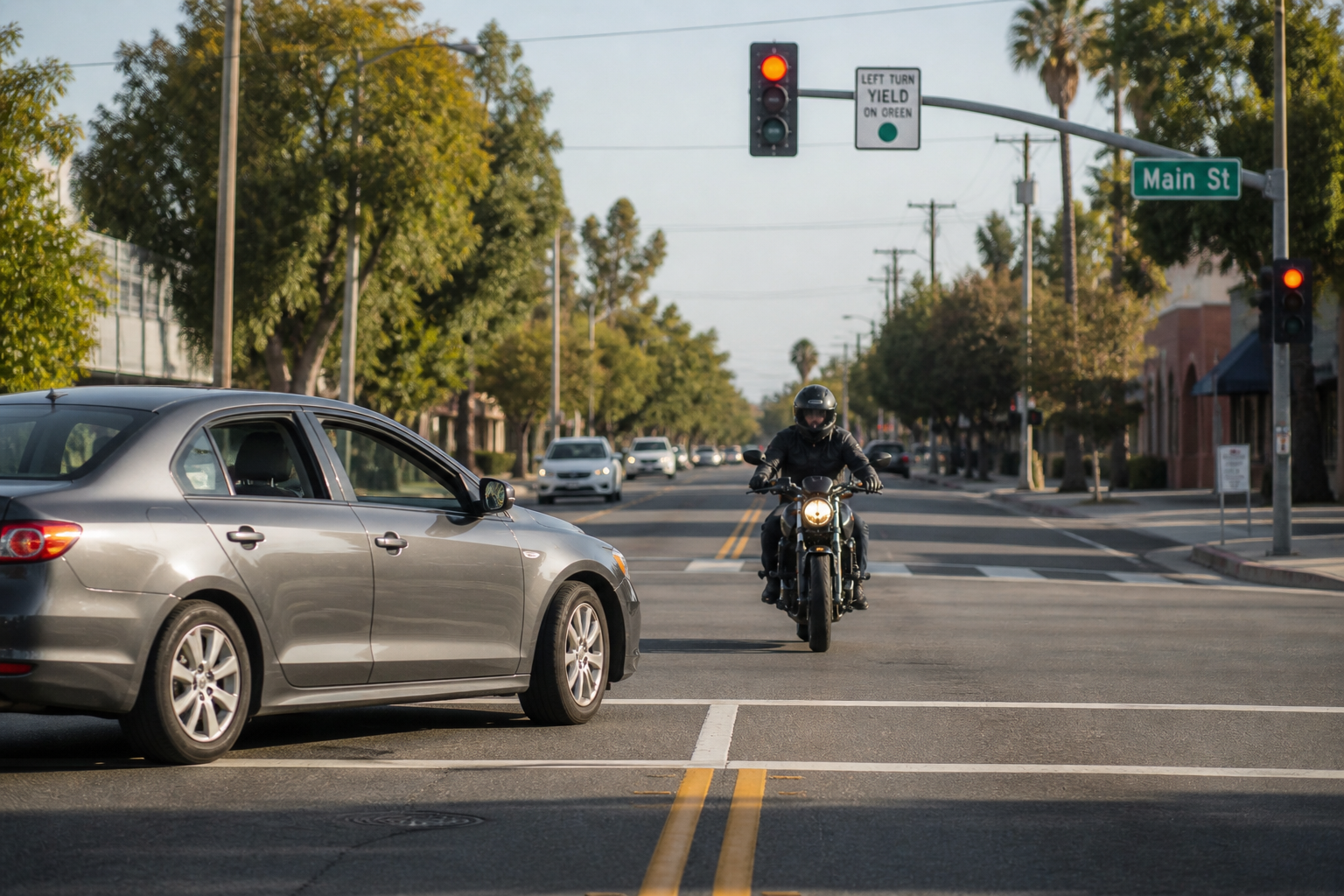
In many left-turn motorcycle crashes, the driver turning left may be found at fault because drivers must yield to oncoming traffic before making a turn. If a motorcycle is approaching from the opposite direction and has the right of way, the turning driver must wait until it is safe to proceed.
However, fault is not automatic in every case. Investigators may review whether the motorcyclist was speeding, whether the traffic light was red or green, whether the driver had a clear view, and whether road or weather conditions affected visibility. These details can influence how responsibility is assigned.
California uses comparative negligence. This means more than one person can share fault for the same crash. For example, a driver may be mostly responsible for turning in front of a motorcycle, while a rider may share some responsibility if they were traveling too fast for the conditions. The percentage of fault depends on the available evidence.
To learn more about this issue, visit our guide on how to prove fault in a San Bernardino motorcycle accident case.
Common Places Where These Accidents Occur
Left-turn motorcycle accidents can happen in many locations, but intersections are the most common. They may also occur near shopping centers, gas stations, parking lot entrances, residential streets, and business driveways.
Some common scenarios include:
- A driver turns left at a traffic light and fails to yield to an oncoming motorcycle.
- A car turns into a driveway or parking lot while a rider approaches from the opposite direction.
- A driver attempts to beat oncoming traffic and cuts across the rider’s lane.
- A vehicle turns left from a side street without noticing a motorcycle on the main road.
- A driver misjudges the motorcycle’s speed and begins turning too soon.
These situations are especially dangerous because the motorcycle may strike the side of the turning vehicle. This type of impact can throw the rider from the motorcycle and cause serious injuries.
Visibility Issues in Left-Turn Motorcycle Crashes
Visibility is one of the most important issues in these accidents. Drivers often say they did not see the motorcycle before turning. While this may explain what happened, it does not automatically excuse the driver’s conduct.
Drivers must check carefully for oncoming vehicles, including motorcycles, before making a left turn. A driver who fails to look properly or turns without enough clearance may still be considered negligent.
Several factors can affect visibility, including:
- Sun glare
- Darkness or poor lighting
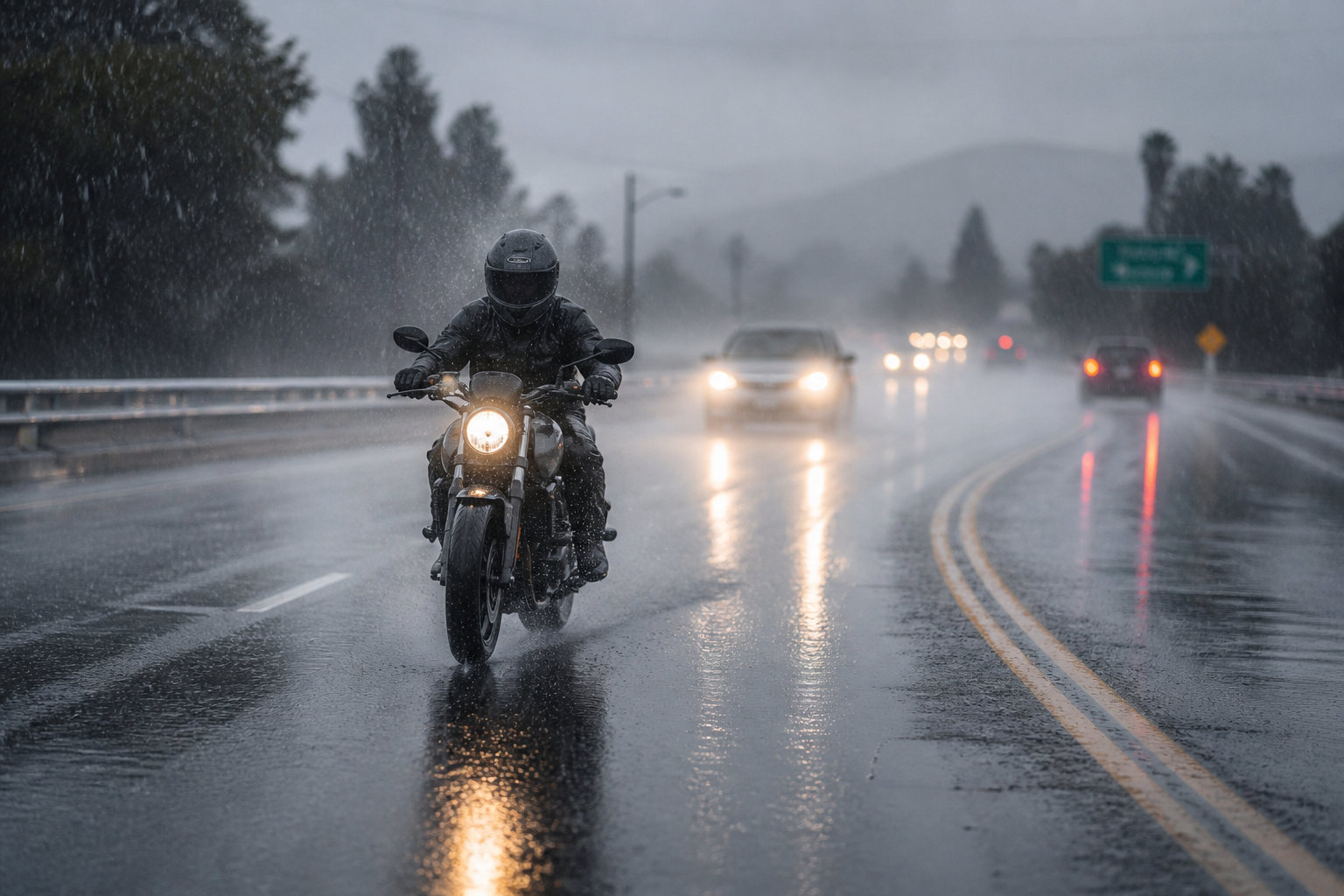
- Rain, fog, or dust
- Traffic congestion
- Obstructions near the intersection
- Vehicles blocking the driver’s view
The National Highway Traffic Safety Administration provides motorcycle safety information that highlights the importance of visibility and driver awareness around motorcycles.
Common Injuries in Left-Turn Motorcycle Accidents
Left-turn motorcycle accidents can cause severe injuries because the rider has little protection against impact. Unlike a car occupant, a motorcyclist does not have airbags, a seat belt, or a vehicle frame to absorb force.
Common injuries may include:
- Head injuries
- Traumatic brain injuries
- Broken arms, legs, ribs, or wrists
- Spinal cord injuries
- Internal injuries
- Road rash
- Shoulder, hip, or knee injuries
The seriousness of the injury may depend on vehicle speed, impact angle, helmet use, protective gear, and whether the rider was thrown from the motorcycle. Even when a rider feels stable after a crash, medical evaluation is important because some injuries may not show immediate symptoms.
You may also find our article on common injuries sustained in motorcycle accidents helpful.
Evidence That May Help Explain What Happened
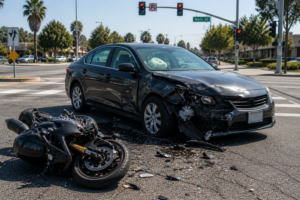 Evidence is important after a left-turn motorcycle accident. Since both sides may disagree about timing, speed, or visibility, documentation can help clarify the facts.
Useful evidence may include:
- Photos of the crash scene
- Photos of vehicle damage
- Traffic camera footage
- Surveillance video from nearby businesses
- Witness statements
- Police reports
- Skid marks or debris patterns
- Traffic signal timing information
- Medical records
The location of damage on the car and motorcycle may help show the direction of travel and point of impact. For example, damage to the passenger side of a car may support the claim that the motorcycle struck the vehicle while it was turning across traffic.
Police reports may also include witness names, traffic violations, diagrams, and officer observations. These details can be helpful when reviewing fault.
For general roadway safety information, you can visit the Centers for Disease Control and Prevention.
How Insurance Companies May View These Accidents
Insurance companies may review left-turn motorcycle accidents closely. They may look at the police report, photos, statements, medical records, and property damage. They may also examine whether the rider was visible, whether the driver had time to yield, and whether either party violated traffic laws.
Insurance adjusters may try to argue that the rider was speeding, lane splitting improperly, or not paying attention. This is why evidence matters. Clear photos, witness statements, and medical documentation can help support a more accurate account of the crash.
For more information about claims, read our guide on understanding insurance claims after a motorcycle accident.
What Riders Should Do After a Left-Turn Accident
After a crash, safety should come first. Riders should move out of traffic if they can do so safely and call emergency services. Medical attention is important, even when injuries seem minor at first.
When possible, riders may take the following steps:
- Call 911 and report the crash.
- Request medical help if anyone is hurt.
- Take photos of the vehicles, road, traffic lights, and injuries.
- Collect witness names and contact information.
- Exchange insurance and contact information with the driver.
- Avoid making statements that admit fault.
- Keep medical records, repair estimates, and related documents.
These steps can help preserve important information while the details are still fresh.
How Riders Can Reduce the Risk of Left-Turn Crashes
Not every crash can be prevented, but riders can take steps to reduce risk at intersections. Slowing down when approaching intersections, watching vehicle wheels, and scanning for drivers preparing to turn can help riders react sooner.
Riders can also keep headlights on, wear visible gear, avoid riding in blind spots, and maintain space when possible. Defensive riding is especially important near intersections because a driver may turn unexpectedly.
The California DMV Motorcycle Handbook offers additional guidance for motorcycle operation and safe riding practices.
Conclusion
When a car turns left in front of a motorcycle, the results can be serious. These crashes often involve questions about right of way, visibility, speed, timing, and driver awareness. While the turning driver may often be responsible, each accident must be reviewed based on its own facts.
Motorcyclists can reduce risk by staying alert at intersections, using visible gear, and watching for turning vehicles. Drivers can help prevent these crashes by checking carefully for motorcycles and yielding when required. A careful review of evidence can help explain what happened and how responsibility may be assigned under California law.