Weather conditions can create serious risks for motorcyclists across California. Rain, fog, wind, heat, and poor visibility can affect how a motorcycle handles, how quickly a rider can stop, and how easily other drivers can see them. Because motorcycles are smaller and less protected than passenger vehicles, even a minor weather change can create a dangerous situation.
Understanding these risks matters for both safety and liability. When a crash happens during bad weather, the weather itself is not always the only cause. Drivers and riders are still expected to adjust their speed, increase following distance, and use reasonable care based on road conditions. When someone fails to do that, negligence may become an issue.
This article explains how weather affects motorcycle accidents, what riders should watch for, and how liability may be evaluated after a weather-related motorcycle crash in California.
Why Weather Conditions Matter More for Motorcyclists
Motorcycles respond differently to weather than cars, trucks, or SUVs. A motorcycle has only two wheels, less surface contact with the road, and no enclosed structure around the rider. This means traction, balance, and visibility are especially important.
When the road is dry and clear, a rider may have more control over braking, turning, and lane positioning. When rain, fog, or wind appears, that control can change quickly. A slippery road may increase stopping distance. A gust of wind may push a motorcycle toward another lane. Fog may make it harder for nearby drivers to notice a rider in time.
Riders can reduce some risks by preparing ahead of time, using proper gear, and adjusting their riding style. Our guide on top motorcycle safety tips for riders in San Bernardino provides more practical safety information for local riders.
Rain and Wet Road Conditions
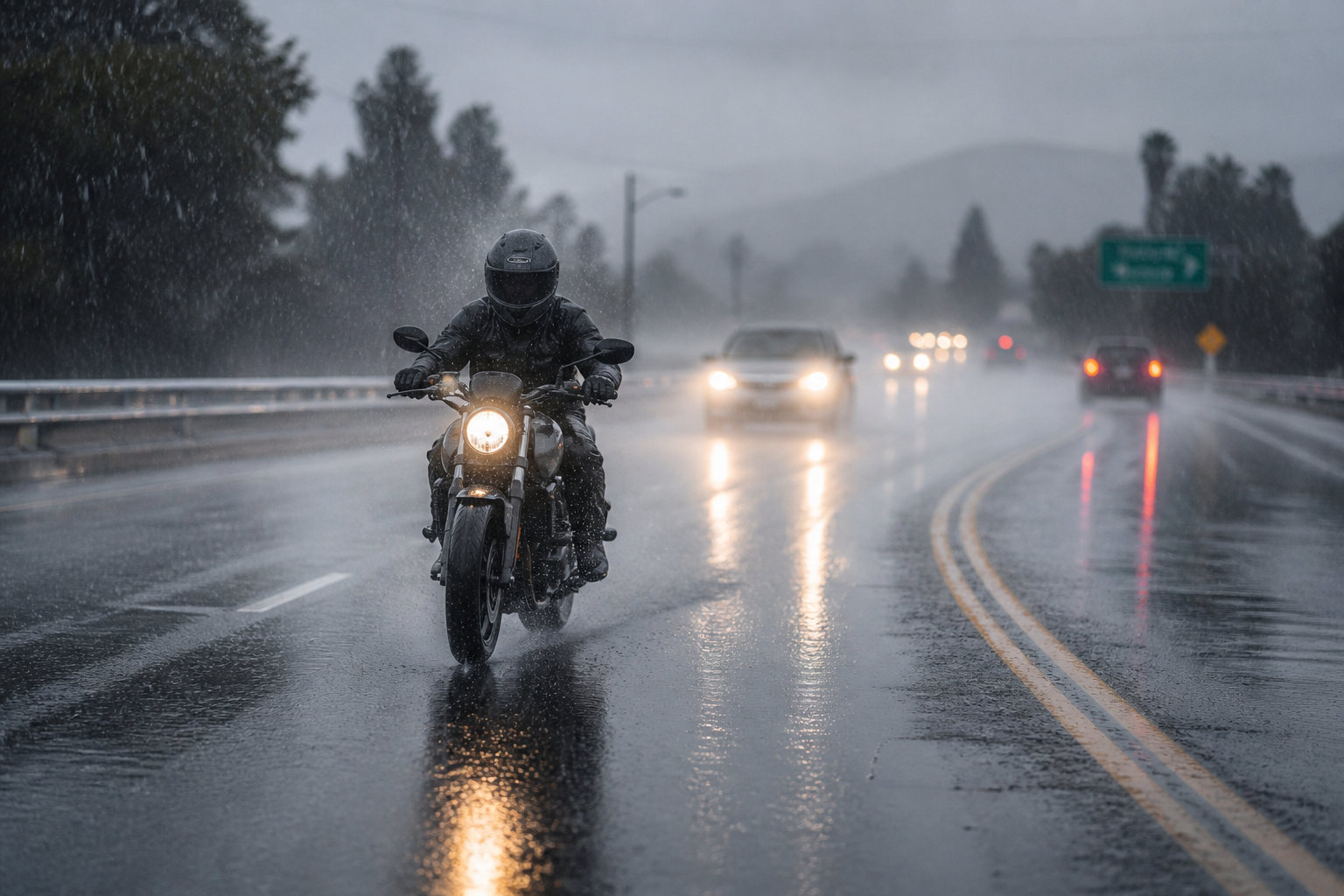
 Rain is one of the most common weather hazards for motorcyclists. Wet roads reduce tire grip, especially during the first part of a storm. Oil, dust, and debris that collect on the roadway can mix with rainwater and create a slick surface. This can make braking, turning, and accelerating more difficult.
A motorcyclist riding in the rain may need more distance to stop safely. Sudden braking can cause the tires to lose traction. Sharp turns may also become more dangerous because the bike has less grip against the pavement. Painted lane markings, metal plates, bridge surfaces, and manhole covers can become especially slippery when wet.
Drivers also face reduced visibility during rain. Windshield glare, water spray, and poor lighting can make motorcycles harder to see. Since motorcycles are already smaller than other vehicles, this can increase the risk of lane-change crashes, rear-end collisions, and intersection accidents.
The National Highway Traffic Safety Administration provides motorcycle safety information that highlights the importance of visibility, protective gear, and defensive riding.
Fog and Poor Visibility
Fog can create dangerous conditions for motorcyclists because it reduces how far drivers and riders can see. In heavy fog, a driver may not notice a motorcycle until the vehicle is too close to stop safely. Riders may also have difficulty seeing road signs, lane markings, traffic signals, and stopped vehicles ahead.
Fog often causes chain-reaction crashes because drivers may follow too closely or brake suddenly. Motorcyclists are especially vulnerable in these situations because they have less physical protection. A rear-end crash that might cause minor damage to a car can cause severe injuries to a rider.
Safe driving in fog requires lower speeds, greater following distance, and proper use of headlights. When drivers ignore these precautions, they may still be found negligent, even if fog contributed to the crash.
Wind and Motorcycle Stability
Strong wind can make motorcycles harder to control. Crosswinds may push a rider sideways, especially on open roads, bridges, mountain routes, or highways with little protection from the surrounding environment. Sudden gusts can force riders to make quick corrections to stay in their lane.
Large vehicles can also create wind turbulence. When a motorcycle passes or is passed by a truck, bus, or large SUV, the movement of air around that vehicle can affect balance. This can be more noticeable during windy weather.
Drivers should give motorcyclists extra space during windy conditions. Following too closely or making sudden lane changes near a motorcycle can increase crash risks. Riders may also need to reduce speed and avoid unnecessary lane movement until the wind becomes more manageable.
Extreme Heat and Rider Fatigue
California riders may also face risks from extreme heat. Hot weather can affect both the road and the rider. Asphalt may become softer in very high temperatures, and tire performance may change depending on road surface conditions.
Heat can also lead to fatigue, dehydration, and reduced concentration. Riders wearing protective gear may become uncomfortable during long trips, but removing gear can increase injury risk if a crash happens. Balancing comfort and protection is an important part of safe riding in hot weather.
Riders can reduce heat-related risks by drinking water, taking breaks, wearing breathable protective gear, and avoiding long rides during the hottest parts of the day when possible.
How Weather Can Affect Liability
Weather may contribute to a motorcycle crash, but it does not automatically remove responsibility from the people involved. California drivers are expected to operate their vehicles safely based on current conditions. This means slowing down when roads are wet, increasing distance in fog, and being alert around motorcycles during difficult weather.
If a driver causes a crash because they were speeding in the rain, following too closely in fog, or changing lanes carelessly during poor visibility, their conduct may be considered negligent. Weather can be part of the crash explanation, but driver behavior remains important.
California also follows comparative negligence. This means more than one party may share fault. For example, a driver may be partly responsible for following too closely, while a rider may also be partly responsible if they were traveling too fast for the conditions. Each case depends on the facts and evidence.
For more information about fault, visit our article on how to prove fault in a San Bernardino motorcycle accident case.
Evidence in Weather-Related Motorcycle Accidents
Evidence is important in any motorcycle accident case, but it can be especially important when weather is involved. Photos of the road, damaged vehicles, skid marks, traffic signs, and surrounding conditions may help explain what happened.
Weather reports can also be useful. Rainfall records, visibility reports, wind conditions, and temperature data may help show what the conditions were like at the time of the crash. Police reports and witness statements may also describe whether drivers were speeding, following too closely, or failing to adjust to weather conditions.
Medical records can connect the crash to the rider’s injuries. Repair estimates and motorcycle damage photos can also help show the force and direction of impact. In more complex cases, accident reconstruction experts may review the evidence and explain how weather, speed, road surface, and vehicle movement contributed to the collision.
Common Motorcycle Accidents During Bad Weather
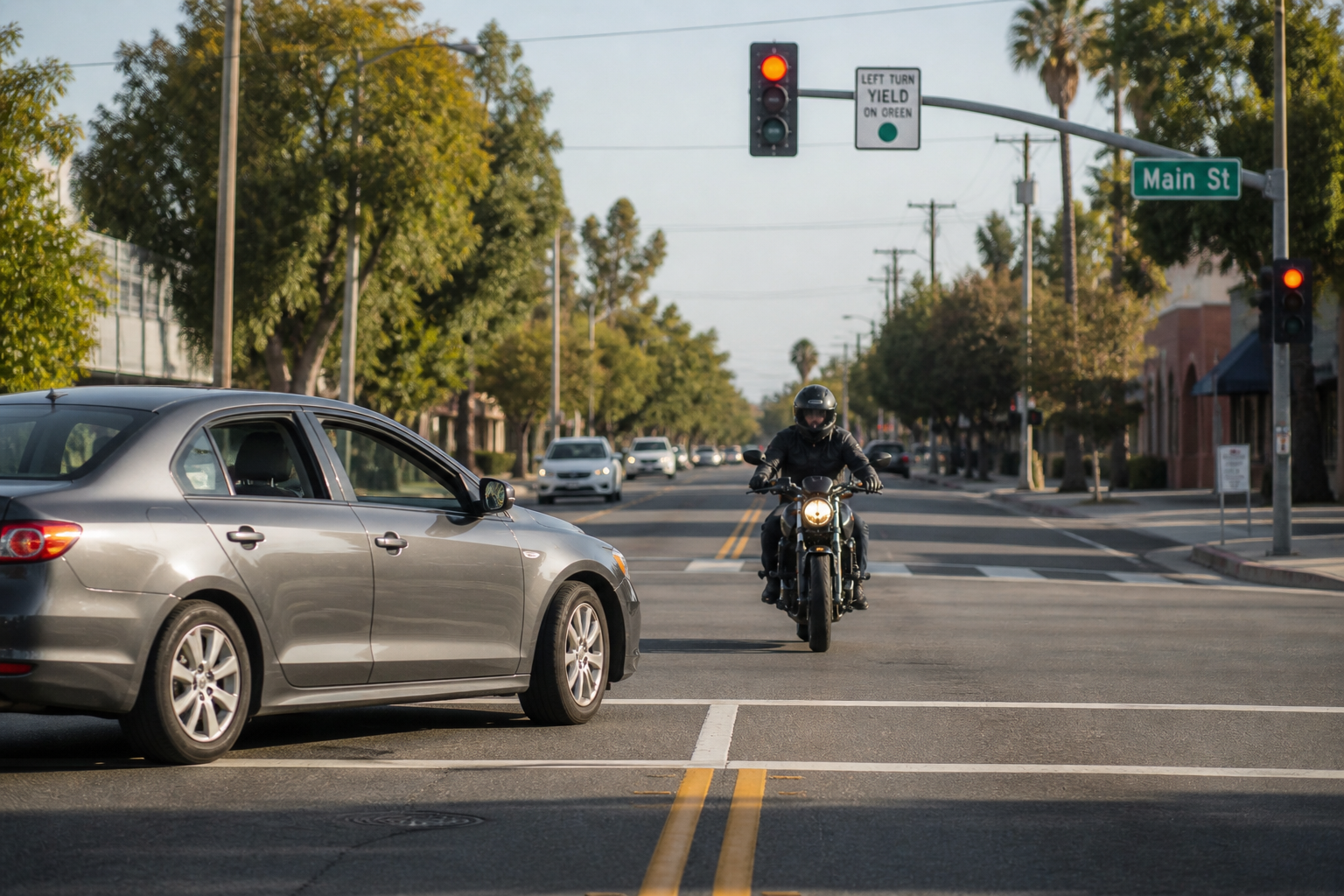
Several types of motorcycle crashes are more common during poor weather. Rear-end crashes may happen when a driver cannot stop in time on a wet road. Lane-change accidents may occur when rain or fog prevents a driver from seeing a motorcycle nearby. Intersection crashes may happen when visibility is reduced or when drivers misjudge distance and speed.
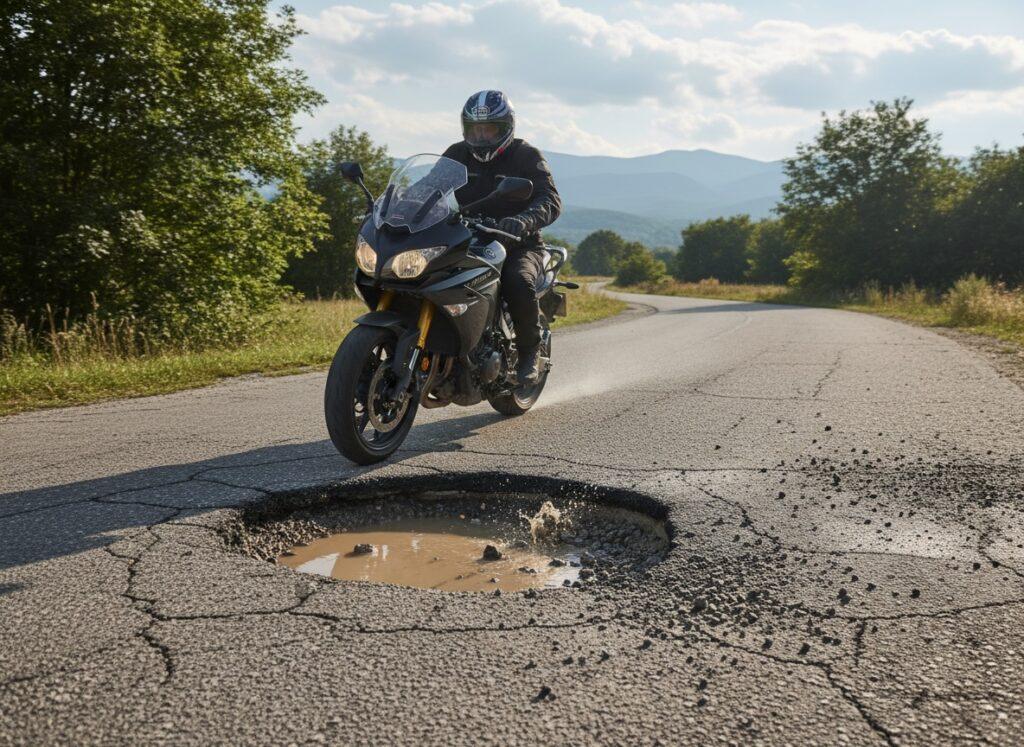
Single-motorcycle crashes can also occur when the rider loses traction on a slippery surface. However, even a single-vehicle motorcycle crash may involve outside factors, such as poor road maintenance, debris, unsafe construction zones, or another driver’s sudden movement.
Because motorcycle crashes can involve many contributing factors, it is important to review the full situation instead of assuming weather was the only cause.
Rider Safety Tips for Poor Weather
Motorcyclists can take steps to reduce risk when riding in bad weather. These steps may not prevent every crash, but they can help improve control and visibility.
- Reduce speed when roads are wet or visibility is low.
- Increase following distance from other vehicles.
- Use headlights and reflective gear to improve visibility.
- Avoid sudden braking, sharp turns, or quick lane changes.
- Watch for slick surfaces such as painted lines, metal covers, and bridge decks.
- Check tires, brakes, and lights before riding.
- Pull over safely if weather becomes too dangerous.
The California DMV Motorcycle Handbook provides additional information on safe riding practices and motorcycle operation.
What Drivers Should Do Around Motorcycles in Bad Weather
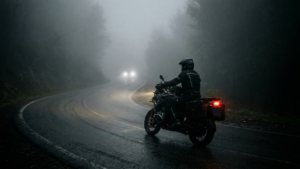 Drivers also have a responsibility to share the road safely. During poor weather, drivers should look carefully for motorcycles before turning, merging, or changing lanes. They should also avoid tailgating and should leave more space than usual.
Motorcycles may need extra room to avoid slick areas, road debris, or standing water. A driver who crowds a rider or cuts them off can create a dangerous situation. In bad weather, even a small mistake can have serious consequences.
What to Do After a Weather-Related Motorcycle Accident
After a motorcycle accident, safety comes first. Riders should move to a safe location if possible and call emergency services. Medical attention is important, even when injuries are not immediately obvious. Some injuries may develop symptoms later.
When it is safe, photos of the scene, road surface, traffic signs, vehicles, and weather conditions may help preserve evidence. Riders should also collect contact information from witnesses and request a copy of the police report when available.
For general claim-related information, you may also read our article on understanding insurance claims after a motorcycle accident.
Conclusion
Weather conditions can have a major impact on motorcycle accidents in California. Rain can reduce traction, fog can limit visibility, wind can affect balance, and heat can increase fatigue. These conditions create real risks, but they do not automatically excuse careless driving.
When a weather-related motorcycle crash happens, liability often depends on whether drivers and riders acted reasonably based on the conditions. Evidence such as photos, reports, witness statements, and weather data can help explain what happened and why.
Motorcyclists can protect themselves by staying alert, adjusting their riding habits, and preparing for changing conditions. Drivers can help reduce crashes by watching carefully for motorcycles and giving riders the space they need, especially when weather makes the road more dangerous.